
Much of the most important legal scholarship is now published and read electronically. The JSW Law Digital Library gives access to licensed and openly available electronic resources for legal education, teaching, research and professional development. Each subscription is reviewed every year on use, cost and programme need, and new databases are added where the evidence supports them.
Subscription databases
| Database | What it offers | Access |
|---|---|---|
| HeinOnline | One of the most comprehensive legal research databases, with more than 200 million pages of law journals, case law, treaties, legislative histories and government documents. | Access HeinOnline |
| ElgarOnline | Scholarly books, journals and reference works from Edward Elgar Publishing in law, economics, public policy and the social sciences. | Access ElgarOnline |
| LexisNexis | Case law, legislation, legal commentary, news, and regulatory and business information. | Access LexisNexis |
Open-access legal resources
A curated and regularly updated selection of institutional repositories, government legal databases, international law archives and other reputable sources around the world complements the subscription databases.
Browse Free Online Legal Resources
DLIN: Bhutan’s National Legal Database
DLIN is the national legal information infrastructure that JSW Law is building for Bhutan: an AI-enabled, authoritative, verified and searchable database of Bhutanese laws, case law, parliamentary records and policies for judges, lawyers, public servants, researchers, students and citizens. Reliable access to the law is a foundation of the rule of law, and DLIN brings materials that are now spread across many institutions and formats into one place. DLIN is scheduled to launch on 17 December 2027.
Laws and regulations: Acts, rules and regulations of Bhutan, kept current.
Case law: judgments of Bhutanese courts, with a programme to translate priority judgments, aiming for 500 verified translations by 2028 and 1,200 by 2031.
Parliamentary records and policies: records of Parliament and national policies.
Legal History and Heritage collection: digitised materials from the JSW Law Archive, from 2028.
GMC materials: legal materials of Gelephu Mindfulness City, through the JSW Diamond Strategy Hub.
Mobile access: a DLIN mobile app, planned for 2028.
Every document is verified against official sources before publication, translations are reviewed by experts, users can report errors and the database is audited every year. DLIN will be free to JSW Law users, subsidised for the justice sector and available by subscription to other institutional users.
| Milestone | Target |
|---|---|
| December 2027 | Launch with at least 200 verified documents |
| 2028 | Mobile app; at least 500 translated and verified judgments; Legal History and Heritage collection |
| 2029 | At least 1,000 verified documents searchable |
| 2031 | At least 2,000 verified documents and 1,200 translated judgments |
Koha catalogue
Koha, the Library’s open-source integrated library system since 2017, manages cataloguing, circulation and user accounts. Through the Online Public Access Catalogue (OPAC), you can search holdings, check availability, view your borrowing record, renew eligible items and place holds, from any location and at any time. Every user receives a personal account; please change the default password on registration and keep your credentials confidential.
JSW Law Institutional Repository
The Institutional Repository, on the DSpace platform, preserves and showcases the scholarly output of the JSW Law community: research, publications, theses, conference papers, working papers, newsletters and selected audiovisual materials. RALS aims to deposit every published JSW Law output where copyright allows, to create author profiles for faculty and to have the Repository indexed by a major scholarly search service by 2029.
- Who may contribute: faculty, researchers and professional staff with academic appointments; graduate and doctoral students; and undergraduate students depositing peer-reviewed or faculty-supervised work.
- What may be deposited: journal articles (including preprints), dissertations and theses, working papers and technical reports, conference papers and posters, JSW Law publications and newsletters, and recordings of lectures and events.
- How to deposit: log in, complete the submission form with metadata, upload files in an accepted format (such as PDF, HTML, TXT, XML, JPEG, PNG, TIFF, MP3 or WAV) and accept the repository licence. The Library checks each deposit for copyright compliance before making it public.
- Your rights: authors keep copyright, and depositing does not change any earlier publishing agreement.
Browse the Repository Deposit Your Work Download Repository Submission Guide
Information literacy, citation and responsible AI
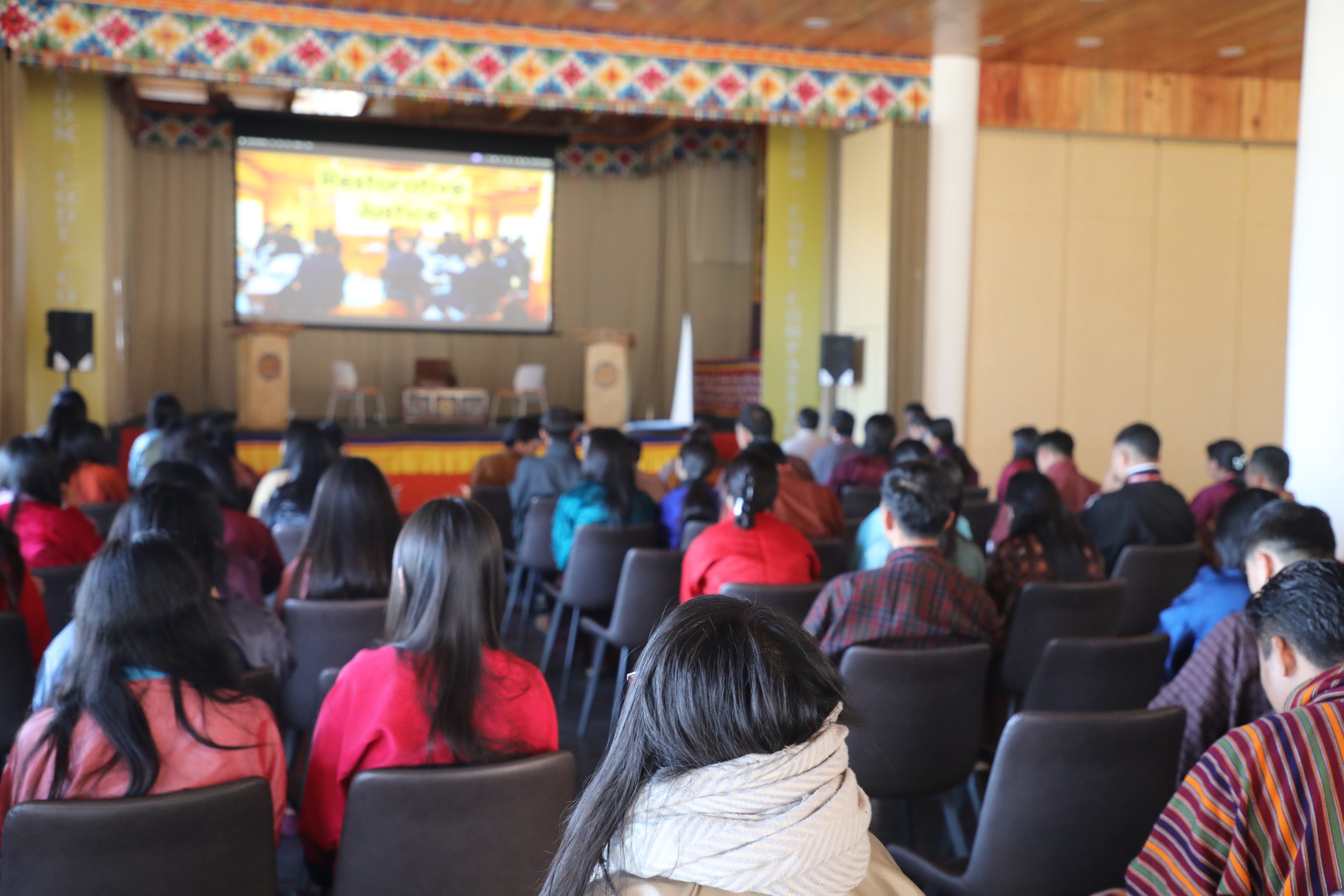
The Library runs a continuing, curriculum-aligned programme that helps students and researchers locate, evaluate and ethically use legal information. Sessions cover Bhutanese primary sources, effective database searching, evaluating sources, OSCOLA citation under the JSW Law OSCOLA Citation Style Guide (2nd edition), academic integrity and the responsible use of AI: AI output must be verified against original sources, its use must be disclosed, and it is a secondary source at most, never a primary source of law.
Book an Information Literacy Session Download OSCOLA Citation Guide Responsible AI Guidance
Remote access and responsible use
Access: subscription resources are available to authorised users through library credentials or the JSW Law campus network.
Personal academic use: you may download materials for your own study and research.
Prohibited: systematic downloading, redistribution and commercial use.
Consequences: a breach of licensing terms can lead to suspension of the Library’s access to a database for the whole JSW Law community.
Access Databases → Digital Library Rules Report an Access Problem